
For lash artists after training
You took a lash course.
So why don’t you feel ready?
Why isolation, retention, placement and real-client confidence can still feel hard after training, and what actually helps close the gap.
Published by Lexie Lash Supply, host of the November 16 Classic Lash Intensive.

You finished the course. You got the certificate. You practiced on the mannequin, saved the tutorials, bought the tweezers, the adhesive and the trays.
Then a real client lay down on your bed.
Isolation took longer than you expected. Stickies kept showing up. Your placement looked fine on one eye and off on the other. A week later, the set started shedding, and you couldn’t tell why.
You picked a map, then second-guessed it. Everything that felt manageable on the mannequin felt different with a real person, real lashes and a clock running.
If that sounds familiar, you’re not alone, and it doesn’t mean you’re bad at this.
Understanding a technique and being able to perform it consistently are two different stages of learning.
Most lash artists hit the space between those two stages. Very few people talk about it.
THE GAP NOBODY TALKS ABOUT:
KNOWING THE STEPS VS. DOING THE WORK
Training gives you the concepts. Consistency is built afterward, and the distance between the two is bigger than most people expect.
“I know what isolation means.”
“I can isolate consistently through an entire set.”
“I learned about retention.”
“I can troubleshoot why this client’s retention was poor.”
“I learned mapping.”
“I can confidently choose a map for the eye in front of me.”
A Certificate of Completion means something. It shows you completed the education.
But technique develops the way any hand skill does: through practice, repetition, feedback and troubleshooting. That part keeps going long after the class ends.
Struggling after training usually isn’t a sign you chose the wrong career. It’s a sign you’re in the stage where knowledge is turning into skill.
3 Signs your training may have left something unfinished
Sign 01
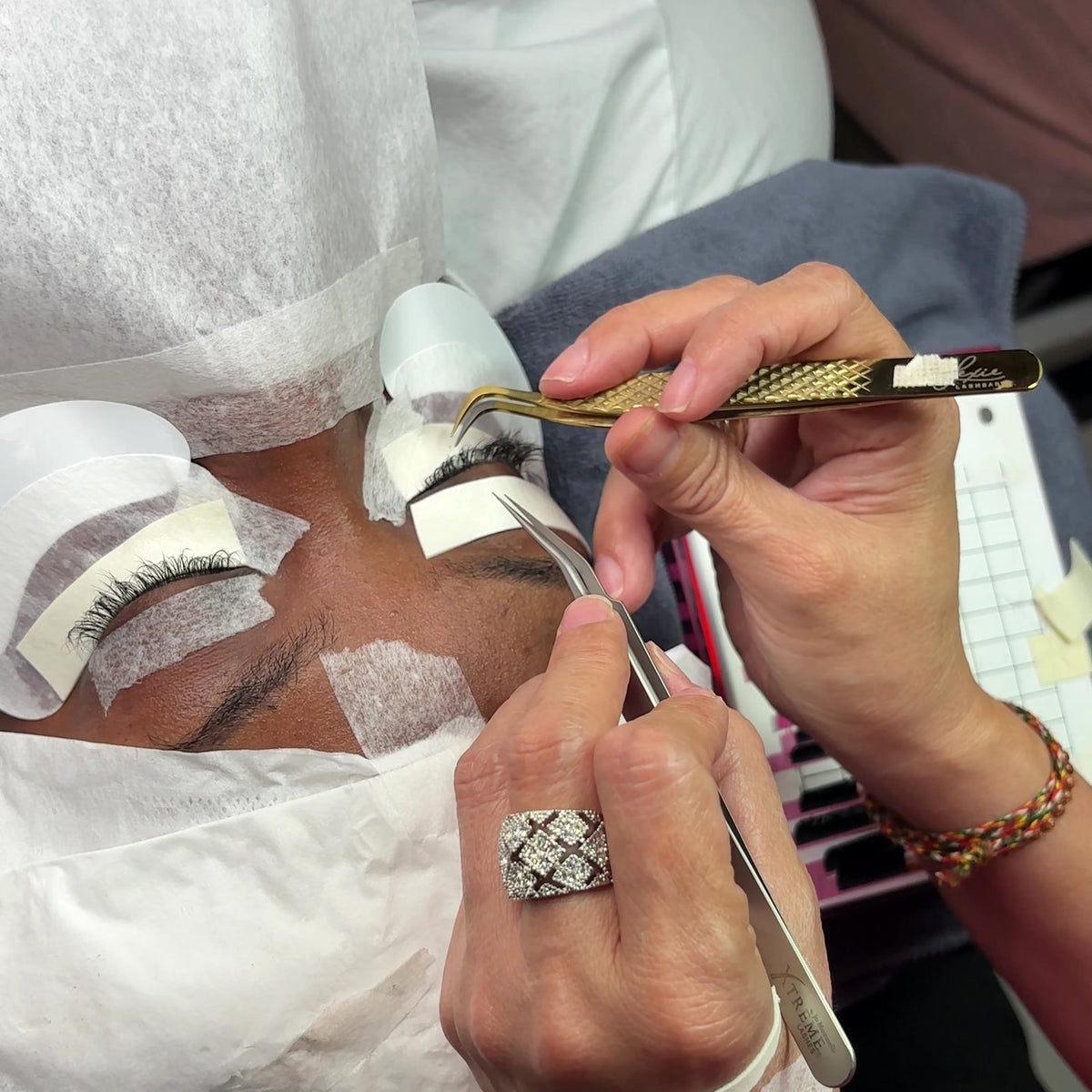
Isolation still feels harder than it should.
You find the natural lash, then lose it. A neighboring lash gets caught. You pick up an extension and wonder whether you actually isolated or just hoped.
Stickies happen, so you slow down. Then the whole set takes longer than you planned.
Maybe you’ve already switched tweezers, or bought a second pair. Sometimes that helps. Often the real issue is the angle, the hand position or how you’re reading the lash line, and new tweezers can’t show you that.
None of this means you can’t do it. Isolation is one of the most common sticking points after training, because it’s precise work that’s hard to judge on your own.
Sign 02
Retention still feels like a guessing game.
A client comes back with gaps, and you start running through the possibilities. Was it the prep? The adhesive? Humidity? The way the extension attached? Placement? Or did she sleep on her face and skip aftercare?
Retention can involve all of those: prep, adhesive, attachment, environment, placement and aftercare.
When something goes wrong, the goal isn’t just buying another adhesive. It’s knowing which variables to look at.
When you understand what each one affects, retention problems stop feeling random. They become things you can troubleshoot.
Sign 03
You know the steps — until there’s a real person in your chair.
A mannequin holds still. Its lashes are uniform. Nobody is watching you work.
Real clients are different. Natural lashes grow at different angles and lengths. Eye shapes vary. Clients blink, flutter and shift. Your hand pressure changes when you’re working around a living eye, and technique that felt controlled starts to feel less steady.
Then the nerves show up.
That’s where “I know how to do this” can suddenly become “Wait… am I doing this right?”
The jump from mannequin to client is one of the hardest moments in lash training. It isn’t a personal failure.
MORE INFORMATION ISN’T ALWAYS THE ANSWER.
When something isn’t working, the natural move is to find more information.
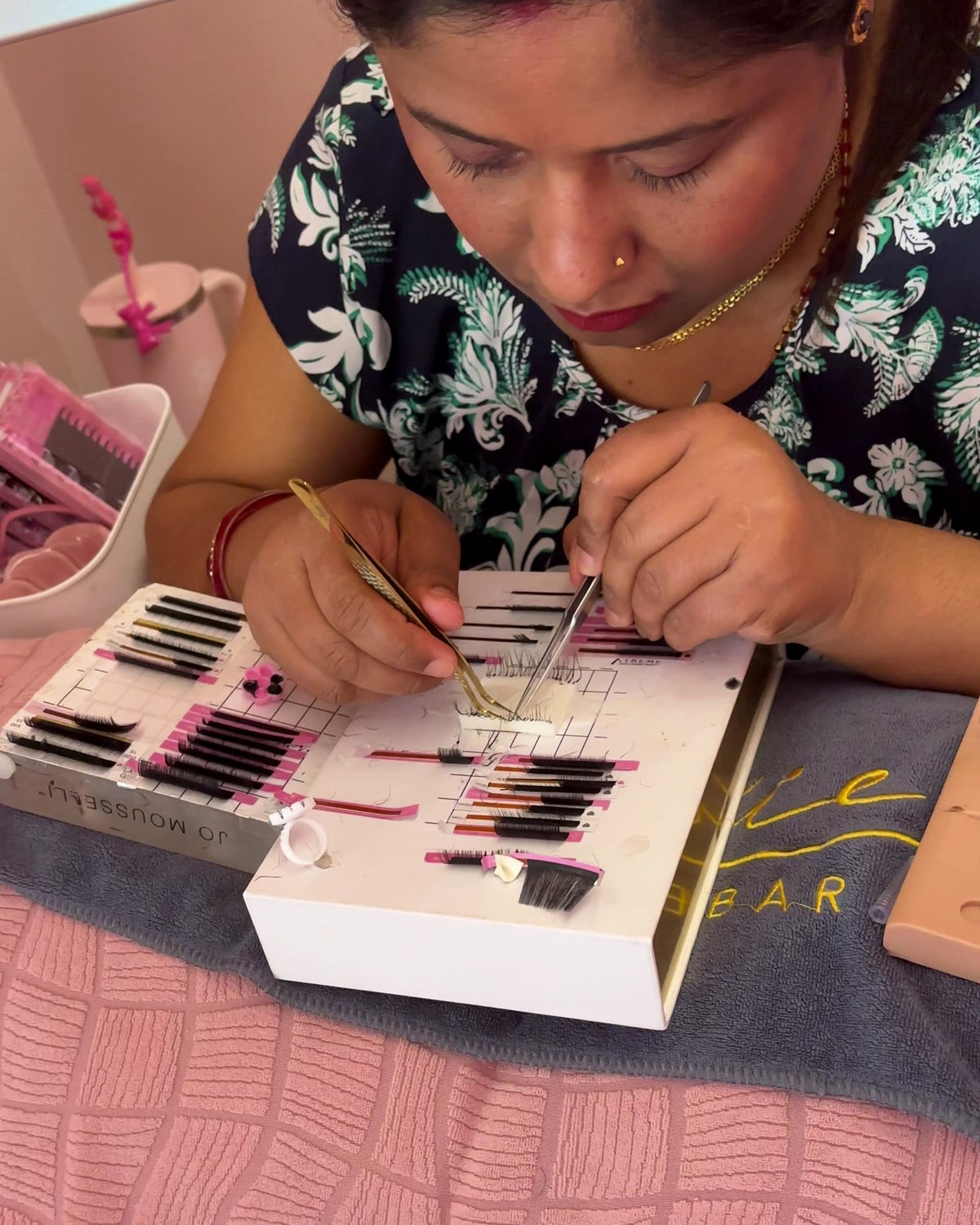
So you save another isolation video. Screenshot another lash map. Watch another retention breakdown. Buy another pair of tweezers.
Tutorials are useful. Plenty of good lash education is free, and it’s worth watching.
But a video can’t see your hands. It can show you what a clean set should look like. It can’t tell you why your set is coming out the way it is.
Eventually, the question changes from:
“What should this look like?”
to:
“What am I doing that needs to change?”
That second question is where focused education, demonstration, feedback and intentional practice matter more than another saved post.
“SOMETIMES THE NEXT STEP ISN’T LEARNING MORE.IT’S UNDERSTANDING WHAT STILL ISN’T CLICKING.”
SO WHAT SHOULD AN INTENSIVE ACTUALLY HELP YOU DO?
If you’re going to spend a day and real money on more training, it should leave you with more than new notes. A good intensive should help you:
- Understand why each technique works, not just the steps
- See which areas of your work still need practice
- Strengthen your Classic Lash foundation
- Understand isolation and placement more clearly
- Troubleshoot retention more intentionally
- Be more deliberate when you choose a map
- Leave knowing what to keep practicing afterward
What it shouldn’t do is promise you’ll walk out a master.
Lash technique develops through repetition: set after set, client after client.
No responsible one-day class should tell you that eight hours will make you a master. If a class promises that, be skeptical.
What a focused intensive can realistically do is:
- Strengthen your understanding of the technique
- Help you spot your weak points
- Answer the questions you’ve been sitting on
- Reinforce the fundamentals
- Give you a clearer direction for practice
The goal is a stronger foundation and clearer next steps. Not overnight mastery.
The practice is still yours to do. The difference is knowing what you’re practicing, and why.
THAT’S THE THINKING BEHIND THE NOVEMBER 16 CLASSIC LASH INTENSIVE.
Lexie Lash Supply presents
1-Day Classic Lash Intensive
NOVEMBER 16 · 9 AM–5 PM CENTRAL
This is one focused day on Classic Lash fundamentals: the foundation the rest of your lash work sits on.
It’s built for lash artists who already know the terms but want to slow the technique down, understand what’s happening and leave with a clearer sense of what to practice next.
- Classic application
- Isolation
- Placement
- Mapping
- Adhesive control
- Retention fundamentals
- Sanitation + safety
- Fills
- Safe removal
THE TRAINING THAT WILL GIVE YOU HANDS-ON EXPERIENCE.
In-Person
1-Day Classic Lash Intensive Training
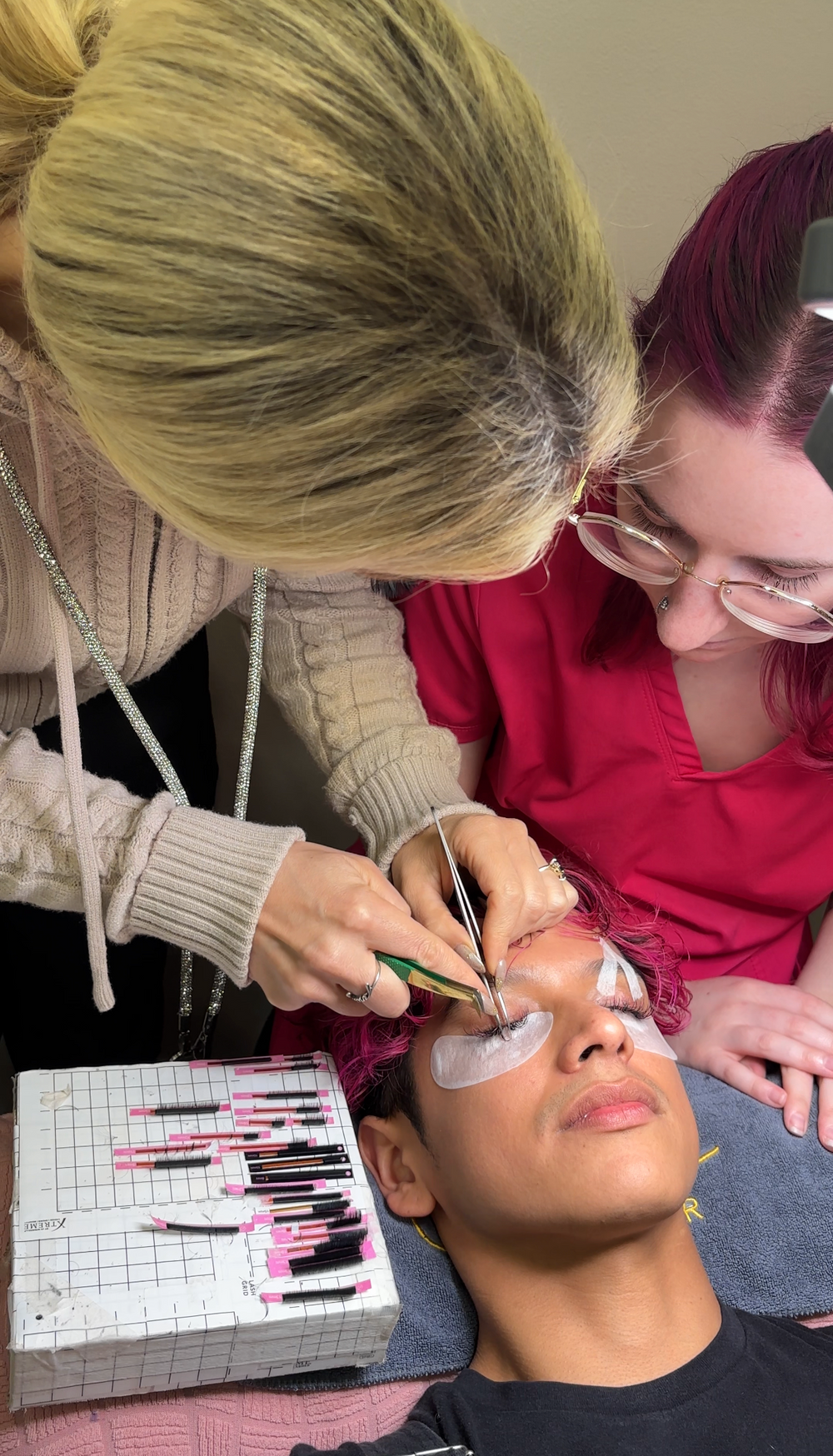
Train in the room, practice during class and work with an instructor who can see what your hands are doing.
Best for
- Hands-on training
- In-room instructor guidance
- Live practice during class
- A lash kit included
Only 10 seats.
Early Bird pricing ends November 1.
COMPLETELY NEW TO LASHES?
START WITH THE RIGHT PATH.
The November 16 Classic Lash Intensive is skills education, and it comes with a Certificate of Completion. It does not replace licensing requirements.
In Texas
If your goal is to legally provide lash extension services for compensation in Texas, Lexie Beauty Academy also offers a TDLR-approved Lash Extension Specialist licensing program.
Outside Texas
Licensing requirements vary by state. Check the rules where you plan to work before offering lash extension services.
“BUT I ALREADY PAID FOR A LASH COURSE.”
That’s exactly why paying for more training can feel risky.
You already trusted one course. You already spent the money. The last thing you want is to pay again and still walk out confused.
So here’s the honest answer.
If your Classic technique feels strong, you’re comfortable troubleshooting your own work, and there’s no specific gap you want to work on, another fundamentals intensive may not be what you need right now.
But if you keep getting stuck on the same things, like isolation, retention, placement, mapping or confidence with a real client, focused training on those exact areas may make more sense than starting over from scratch.
You don’t have to relearn everything. You may just need to see the parts that aren’t clicking explained more closely.

Who’s teaching
Lexie Truong
- ExperienceTwo decades as a lash artist
- BackgroundFounder of Lexie Beauty Academy in Saginaw, TX
- TeachingFormer Cisco-certified instructor
Lexie Truong is the founder of Lexie Beauty Academy in Saginaw, Texas. She brings two decades of lash experience and a background as a certified technical instructor.
That combination shapes how she teaches: step by step, with structure, and with clear explanations of why each part of the technique works.
YOU MAY NOT NEED TO START OVER.
If you already know the terminology, understand the basic process and have training behind you, going back to square one may not be the answer.
It may be slowing down.
Looking at the technique more closely.
Figuring out exactly where you’re getting stuck.
And being more intentional about what you practice next.
That’s what November 16 is for.
READY TO WORK ON WHAT STILL ISN’T CLICKING?
In-Person
- November 16
- Saginaw, TX
- Hands-On Training
- Lash Kit Included
- Only 10 Seats
- Early Bird from $795Regular Tuition $995
Completely new and pursuing Texas licensure?
EXPLORE TEXAS LICENSING
The Classic Lash Intensive provides lash education and a Certificate of Completion. It is not a state license and does not replace licensing requirements. In Texas, a TDLR license is required to perform lash extensions for compensation. Results depend on individual practice.